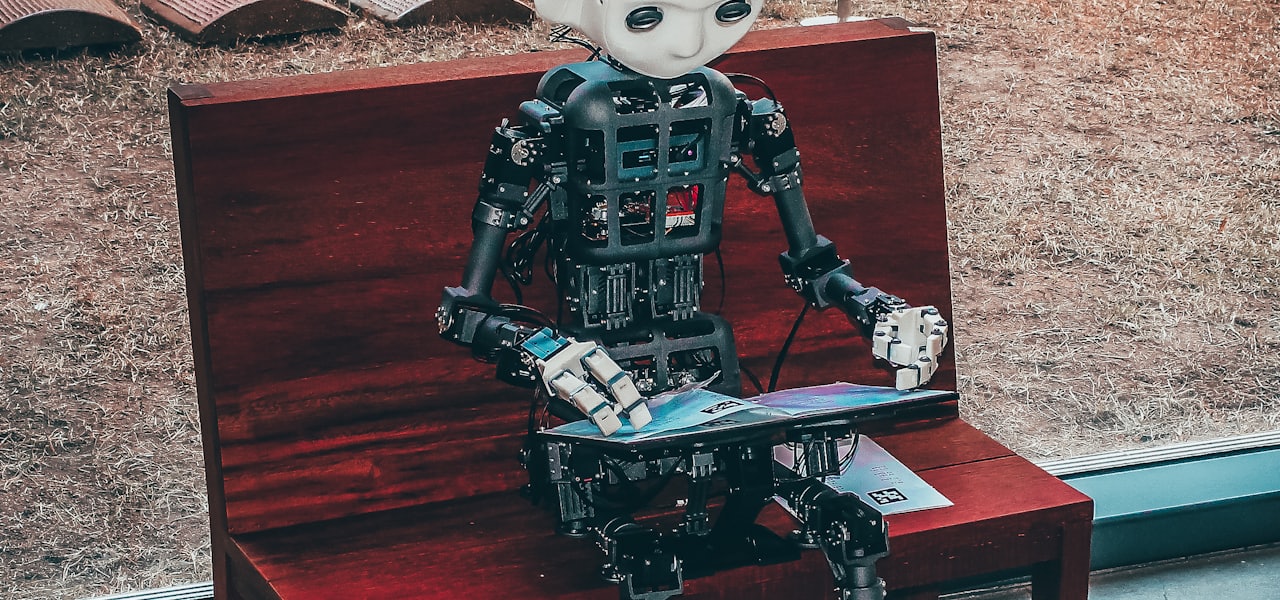
The Ebert test gauges whether a computer-based synthesized voice can tell a joke with sufficient skill to cause people to laugh. It was proposed by film critic Roger Ebert at the 2011 TED conference as a challenge to software developers to have a computerized voice master the inflections, delivery, timing, and intonations of human speech. The test is similar to the Turing test proposed by Alan Turing in 1950 as a way to gauge a computer's ability to exhibit intelligent behavior by generating performance indistinguishable from a human being. If the computer can successfully tell a joke, and do the timing and delivery as well as Henny Youngman, then that's the voice I want. Ebert lost his voice in 2006 after undergoing surgery to treat thyroid cancer. He employed a Scottish company called CereProc, which custom-tailors text-to-speech software for voiceless customers who record their voices at length before losing them, and mined tapes and DVD commentaries featuring Ebert to create a voice that sounded more like his own voice. He first publicly used the voice they devised for him in his March 2, 2010, appearance on The Oprah Winfrey Show. The audience of Ebert's 2011 TED talk about joke delivery by synthesized voices erupted with laughter when a synthesized voice delivered the following joke: "A guy goes into a psychiatrist. The psychiatrist says, 'You’re crazy.' The guy says, 'I want a second opinion.' The psychiatrist says, 'All right, you’re ugly, too.'"
Referring expression generation
Referring expression generation (REG) is the subtask of natural language generation (NLG) that received most scholarly attention. While NLG is concerned with the conversion of non-linguistic information into natural language, REG focuses only on the creation of referring expressions (noun phrases) that identify specific entities called targets. This task can be split into two sections. The content selection part determines which set of properties distinguish the intended target and the linguistic realization part defines how these properties are translated into natural language. A variety of algorithms have been developed in the NLG community to generate different types of referring expressions. == Types of referring expressions == A referring expression (RE), in linguistics, is any noun phrase, or surrogate for a noun phrase, whose function in discourse is to identify some individual object (thing, being, event...) The technical terminology for identify differs a great deal from one school of linguistics to another. The most widespread term is probably refer, and a thing identified is a referent, as for example in the work of John Lyons. In linguistics, the study of reference relations belongs to pragmatics, the study of language use, though it is also a matter of great interest to philosophers, especially those wishing to understand the nature of knowledge, perception and cognition more generally. Various devices can be used for reference: determiners, pronouns, proper names... Reference relations can be of different kinds; referents can be in a "real" or imaginary world, in discourse itself, and they may be singular, plural, or collective. === Pronouns === The simplest type of referring expressions are pronoun such as he and it. The linguistics and natural language processing communities have developed various models for predicting anaphor referents, such as centering theory, and ideally referring-expression generation would be based on such models. However most NLG systems use much simpler algorithms, for example using a pronoun if the referent was mentioned in the previous sentence (or sentential clause), and no other entity of the same gender was mentioned in this sentence. === Definite noun phrases === There has been a considerable amount of research on generating definite noun phrases, such as the big red book. Much of this builds on the model proposed by Dale and Reiter. This has been extended in various ways, for example Krahmer et al. present a graph-theoretic model of definite NP generation with many nice properties. In recent years a shared-task event has compared different algorithms for definite NP generation, using the TUNA corpus. === Spatial and temporal reference === Recently there has been more research on generating referring expressions for time and space. Such references tend to be imprecise (what is the exact meaning of tonight?), and also to be interpreted in different ways by different people. Hence it may be necessary to explicitly reason about false positive vs false negative tradeoffs, and even calculate the utility of different possible referring expressions in a particular task context. === Criteria for good expressions === Ideally, a good referring expression should satisfy a number of criteria: Referential success: It should unambiguously identify the referent to the reader. Ease of comprehension: The reader should be able to quickly read and understand it. Computational complexity: The generation algorithm should be fast No false inferences: The expression should not confuse or mislead the reader by suggesting false implicatures or other pragmatic inferences. For example, a reader may be confused if he is told Sit by the brown wooden table in a context where there is only one table. == History == === Pre-2000 era === REG goes back to the early days of NLG. One of the first approaches was done by Winograd in 1972 who developed an "incremental" REG algorithm for his SHRDLU program. Afterwards researchers started to model the human abilities to create referring expressions in the 1980s. This new approach to the topic was influenced by the researchers Appelt and Kronfeld who created the programs KAMP and BERTRAND and considered referring expressions as parts of bigger speech acts. Some of their most interesting findings were the fact that referring expressions can be used to add information beyond the identification of the referent as well as the influence of communicative context and the Gricean maxims on referring expressions. Furthermore, its skepticism concerning the naturalness of minimal descriptions made Appelt and Kronfeld's research a foundation of later work on REG. The search for simple, well-defined problems changed the direction of research in the early 1990s. This new approach was led by Dale and Reiter who stressed the identification of the referent as the central goal. Like Appelt they discuss the connection between the Gricean maxims and referring expressions in their culminant paper in which they also propose a formal problem definition. Furthermore, Reiter and Dale discuss the Full Brevity and Greedy Heuristics algorithms as well as their Incremental Algorithm(IA) which became one of the most important algorithms in REG. === Later developments === After 2000 the research began to lift some of the simplifying assumptions, that had been made in early REG research in order to create more simple algorithms. Different research groups concentrated on different limitations creating several expanded algorithms. Often these extend the IA in a single perspective for example in relation to: Reference to Sets like "the t-shirt wearers" or "the green apples and the banana on the left" Relational Descriptions like "the cup on the table" or "the woman who has three children" Context Dependency, Vagueness and Gradeability include statements like "the older man" or "the car on the left" which are often unclear without a context Salience and Generation of Pronouns are highly discourse dependent making for example "she" a reference to "the (most salient) female person" Many simplifying assumptions are still in place or have just begun to be worked on. Also a combination of the different extensions has yet to be done and is called a "non-trivial enterprise" by Krahmer and van Deemter. Another important change after 2000 was the increasing use of empirical studies in order to evaluate algorithms. This development took place due to the emergence of transparent corpora. Although there are still discussions about what the best evaluation metrics are, the use of experimental evaluation has already led to a better comparability of algorithms, a discussion about the goals of REG and more task-oriented research. Furthermore, research has extended its range to related topics such as the choice of Knowledge Representation(KR) Frameworks. In this area the main question, which KR framework is most suitable for the use in REG remains open. The answer to this question depends on how well descriptions can be expressed or found. A lot of the potential of KR frameworks has been left unused so far. Some of the different approaches are the usage of: Graph search which treats relations between targets in the same way as properties. Constraint Satisfaction which allows for a separation between problem specification and the implementation. Modern Knowledge Representation which offers logical inference in for example Description Logic or Conceptual Graphs. == Problem definition == Dale and Reiter (1995) think about referring expressions as distinguishing descriptions. They define: The referent as the entity that should be described The context set as set of salient entities The contrast set or potential distractors as all elements of the context set except the referent A property as a reference to a single attribute–value pair Each entity in the domain can be characterised as a set of attribute–value pairs for example ⟨ {\displaystyle \langle } type, dog ⟩ {\displaystyle \rangle } , ⟨ {\displaystyle \langle } gender, female ⟩ {\displaystyle \rangle } or ⟨ {\displaystyle \langle } age, 10 years ⟩ {\displaystyle \rangle } . The problem then is defined as follows: Let r {\displaystyle r} be the intended referent, and C {\displaystyle C} be the contrast set. Then, a set L {\displaystyle L} of attribute–value pairs will represent a distinguishing description if the following two conditions hold: Every attribute–value pair in L {\displaystyle L} applies to r {\displaystyle r} : that is, every element of L {\displaystyle L} specifies an attribute–value that r {\displaystyle r} possesses. For every member c {\displaystyle c} of C {\displaystyle C} , there is at least one element l {\displaystyle l} of L {\displaystyle L} that does not apply to c {\displaystyle c} : that is, there is an l {\displaystyle l} in L {\displaystyle L} that specifies an attribute–value that c {\displaystyle c} does not possess. l {\displaystyle l} is said
Mittens (chess)
Mittens is a chess engine developed by Chess.com. It was released on January 1, 2023, alongside four other engines, all of them given cat-related names. The engine became a viral sensation in the chess community due to exposure through content made by chess streamers and a social media marketing campaign, later contributing to record levels of traffic to the Chess.com website and causing issues with database scalability. Mittens was given a rating of one point by Chess.com, although it was evidently stronger than that. Various chess masters played matches against the engine, with players such as Hikaru Nakamura and Levy Rozman drawing and losing their games respectively. A month after its release, Mittens was removed from the website on February 1, as expected through Chess.com's monthly bot cycles. In December 2023, Mittens was brought back in a group of Chess.com's most popular bots of 2023. In January 2024, Mittens was removed again. == Release == Mittens was released on January 1, 2023, as part of a New Year event on Chess.com. It was one of five engines released, all with names related to cats. The other engines released were named Scaredy Cat, rated 800; Angry Cat, rated 1000; Mr. Grumpers, rated 1200 and Catspurrov (a pun on Garry Kasparov), rated 1400. As part of the announcement, a picture of each engine was accompanied by a short description of its character. The description given for Mittens suggested that the engine was hiding something, reading: Mittens likes chess… But how good is she? Of the five engines released, Mittens was by far the most popular. In December 2023, Chess.com re-released Mittens as part of a "best of 2023" group of chess bots made to showcase their most popular bots of the year. == Design == Mittens was conceptualized by Chess.com employee Will Whalen. Appearing as a kitten, Mittens trash talked its opponents with a selection of voice lines: these lines included quotes from J. Robert Oppenheimer, Vincent van Gogh and Friedrich Nietzsche, as well as the 1967 film Le Samouraï. The engine's "personality" was devised by a writing team headed by Sean Becker, and Marija Casic provided the engine's graphics. Chess.com did not disclose any information about the software running the engine. It may be based on Chess.com's Komodo Dragon 3 engine. Mittens' strategy was to slowly grind down an opponent, a tactic likened to the playing style of Anatoly Karpov. Becker stated that the design team believed it would be "way more demoralizing and funny" for the engine to play this way. According to Hikaru Nakamura, Mittens sometimes missed the best move (or winning positions). == Rating == On Chess.com, Mittens had a rating of one point. However, the engine's playing style and tactics showed that it was stronger than that; Mittens was able to beat or draw against many top human players. In an interview with CNN Business, Whalen stated that the idea behind giving Mittens a rating of one was to surprise its opponents, giving it the upper hand psychologically. Estimates of Mittens' true rating range from an Elo of 3200 to 3500, because of its ability to beat other engines of around that level. An upper bound of the engine's rating was found after Levy Rozman made Mittens play against Stockfish 15, a 3700 rated engine. Mittens lost the two games that the engines played. The range of Mittens' possible ratings was summarized by Dot Esports, who stated: It seems like she’s around the 3200–3500 rating range (in Chess.com terms, where the best human players, like Magnus Carlsen and Hikaru Nakamura, sport a 3000–3100 rating in the faster formats), as evidenced by her victories over the site’s otherwise strongest, 3200-rated bots, and her defeat to Stockfish 15, which is currently rated around 3700. == Games == Against human players, Mittens won over 99 percent of the millions of games it played. Chess players such as Hikaru Nakamura, Benjamin Bok, Levy Rozman and Eric Rosen struggled against Mittens; while Rozman and Rosen both lost against the engine, Nakamura and Bok were both able to make a draw. In particular, Nakamura's game against the engine lasted 166 moves; he was playing as White. Bok, Benjamin Finegold and Rozman later went on to win against Mittens, the latter with engine assistance from Stockfish. Magnus Carlsen publicly refused to play the engine, calling it a "transparent marketing trick" and "a soulless computer". Against other chess engines, Mittens participated in the Chess.com Computer Chess Championship as a side act. In the competition, Mittens played 150 games against an engine named after the film M3GAN and won overall with a score of 81.5 to 68.5. This equated to 54 percent of the games played. During the event, an estimate of Mittens' rating was made at 3515 points. == Impact == Mittens went viral in the chess community due to its concept and design: according to an announcement by Chess.com, a combined total of 120 million games were played against the cat engines over the course of January, with around 40 million played against Mittens. The popularity of the engine was helped by the social media exposure created by Chess.com. This included creating an official Twitter account to promote the engine. Chess streamers like Rozman and Nakamura helped cultivate this by creating content around the engine. A video by Nakamura entitled "Mittens the chess bot will make you quit chess" gained over 3.5 million views on YouTube. On January 11, Chess.com reported issues with database scalability due to record levels of traffic: 40 percent more games had been played on Chess.com in January 2023 than any other month since the website's release. According to The Wall Street Journal, the popularity spike was more than the similar surge following the release of Netflix's The Queen's Gambit. The popularity of Mittens was cited by Chess.com as a reason for this instability. The problems continued throughout January; Chess.com stated that they would have to upgrade their servers and invest more in cloud computing to solve the problems caused by the website's popularity surge. On February 1, 2023, Mittens and the other cat engines were removed from the computer section of Chess.com. They were replaced with five new engines themed around artificial intelligence. A tweet was posted on the Mittens's Twitter account after the engine's removal, reading "This is just the beginning. Goodbye for now."
Business rules engine
A business rules engine is a software system that executes one or more business rules in a runtime production environment. The rules might come from legal regulation ("An employee can be fired for any reason or no reason but not for an illegal reason"), company policy ("All customers that spend more than $100 at one time will receive a 10% discount"), or other sources. A business rule system enables these company policies and other operational decisions to be defined, tested, executed and maintained separately from application code. Rule engines typically support rules, facts, priority (score), mutual exclusion, preconditions, and other functions. Rule engine software is commonly provided as a component of a business rule management system which, among other functions, provides the ability to: register, define, classify, and manage all the rules, verify consistency of rules definitions (”Gold-level customers are eligible for free shipping when order quantity > 10” and “maximum order quantity for Silver-level customers = 15” ), define the relationships between different rules, and relate some of these rules to IT applications that are affected or need to enforce one or more of the rules. == IT use case == In any IT application, business rules can change more frequently than other parts of the application code. Rules engines or inference engines serve as pluggable software components which execute business rules that a business rules approach has externalized or separated from application code. This externalization or separation allows business users to modify the rules without the need for IT intervention. The system as a whole becomes more easily adaptable with such external business rules, but this does not preclude the usual requirements of QA and other testing. == History == An article in Computerworld traces rules engines to the early 1990s and to products from the likes of Pegasystems, Fair Isaac Corp, ILOG and eMerge from Sapiens. == Design strategies == Many organizations' rules efforts combine aspects of what is generally considered workflow design with traditional rule design. This failure to separate the two approaches can lead to problems with the ability to re-use and control both business rules and workflows. Design approaches that avoid this quandary separate the role of business rules and workflows as follows: Business rules produce knowledge; Workflows perform business work. Concretely, that means that a business rule may do things like detect that a business situation has occurred and raise a business event (typically carried via a messaging infrastructure) or create higher level business knowledge (e.g., evaluating the series of organizational, product, and regulatory-based rules concerning whether or not a loan meets underwriting criteria). On the other hand, a workflow would respond to an event that indicated something such as the overloading of a routing point by initiating a series of activities. This separation is important because the same business judgment (mortgage meets underwriting criteria) or business event (router is overloaded) can be reacted to by many different workflows. Embedding the work done in response to rule-driven knowledge creation into the rule itself greatly reduces the ability of business rules to be reused across an organization because it makes them work-flow specific. To create an architecture that employs a business rules engine it is essential to establish the integration between a BPM (Business Process Management) and a BRM (Business Rules Management) platform that is based upon processes responding to events or examining business judgments that are defined by business rules. There are some products in the marketplace that provide this integration natively. In other situations this type of abstraction and integration will have to be developed within a particular project or organization. Most Java-based rules engines provide a technical call-level interface, based on the JSR-94 application programming interface (API) standard, in order to allow for integration with different applications, and many rule engines allow for service-oriented integrations through Web-based standards such as WSDL and SOAP. Most rule engines provide the ability to develop a data abstraction that represents the business entities and relationships that rules should be written against. This business entity model can typically be populated from a variety of sources including XML, POJOs, flat files, etc. There is no standard language for writing the rules themselves. Many engines use a Java-like syntax, while some allow the definition of custom business-friendly languages. Most rules engines function as a callable library. However, it is becoming more popular for them to run as a generic process akin to the way that RDBMSs behave. Most engines treat rules as a configuration to be loaded into their process instance, although some are actually code generators for the whole rule execution instance and others allow the user to choose. == Types of rule engines == There are a number of different types of rule engines. These types (generally) differ in how Rules are scheduled for execution. Most rules engines used by businesses are forward chaining, which can be further divided into two classes: The first class processes so-called production/inference rules. These types of rules are used to represent behaviors of the type IF condition THEN action. For example, such a rule could answer the question: "Should this customer be allowed a mortgage?" by executing rules of the form "IF some-condition THEN allow-customer-a-mortgage". The other type of rule engine processes so-called reaction/Event condition action rules. The reactive rule engines detect and react to incoming events and process event patterns. For example, a reactive rule engine could be used to alert a manager when certain items are out of stock. The biggest difference between these types is that production rule engines execute when a user or application invokes them, usually in a stateless manner. A reactive rule engine reacts automatically when events occur, usually in a stateful manner. Many (and indeed most) popular commercial rule engines have both production and reaction rule capabilities, although they might emphasize one class over another. For example, most business rules engines are primarily production rules engines, whereas complex event processing rules engines emphasize reaction rules. In addition, some rules engines support backward chaining. In this case a rules engine seeks to resolve the facts to fit a particular goal. It is often referred to as being goal driven because it tries to determine if something exists based on existing information. Another kind of rule engine automatically switches between back- and forward-chaining several times during a reasoning run, e.g. the Internet Business Logic system, which can be found by searching the web. A fourth class of rules engine might be called a deterministic engine. These rules engines may forgo both forward chaining and backward chaining, and instead utilize domain-specific language approaches to better describe policy. This approach is often easier to implement and maintain, and provides performance advantages over forward or backward chaining systems. There are some circumstance where fuzzy logic based inference may be more appropriate, where heuristics are used in rule processing, rather than Boolean rules. Examples might include customer classification, missing data inference, customer value calculations, etc. The DARL language and the associated inference engine and editors is an example of this approach. == Rules engines for access control / authorization == One common use case for rules engines is standardized access control to applications. OASIS defines a rules engine architecture and standard dedicated to access control called XACML (eXtensible Access Control Markup Language). One key difference between a XACML rule engine and a business rule engine is the fact that a XACML rule engine is stateless and cannot change the state of any data. The XACML rule engine, called a Policy Decision Point (PDP), expects a binary Yes/No question e.g. "Can Alice view document D?" and returns a decision e.g. Permit / deny.
OpenVX
OpenVX is an open, royalty-free standard for cross-platform acceleration of computer vision applications. It is designed by the Khronos Group to facilitate portable, optimized and power-efficient processing of methods for vision algorithms. This is aimed for embedded and real-time programs within computer vision and related scenarios. It uses a connected graph representation of operations. == Overview == OpenVX specifies a higher level of abstraction for programming computer vision use cases than compute frameworks such as OpenCL. The high level makes the programming easy and the underlying execution will be efficient on different computing architectures. This is done while having a consistent and portable vision acceleration API. OpenVX is based on a connected graph of vision nodes that can execute the preferred chain of operations. It uses an opaque memory model, allowing to move image data between the host (CPU) memory and accelerator, such as GPU memory. As a result, the OpenVX implementation can optimize the execution through various techniques, such as acceleration on various processing units or dedicated hardware. This architecture facilitates applications programmed in OpenVX on different systems with different power and performance, including battery-sensitive, vision-enabled, wearable displays. OpenVX is complementary to the open source vision library OpenCV. OpenVX in some applications offers a better optimized graph management than OpenCV. == History == OpenVX 1.0 specification was released in October 2014. OpenVX sample implementation was released in December 2014. OpenVX 1.1 specification was released on May 2, 2016. OpenVX 1.2 was released on May 1, 2017. Updated OpenVX adopters program and OpenVX 1.2 conformance test suite was released on November 21, 2017. OpenVX 1.2.1 was released on November 27, 2018. OpenVX 1.3 was released on October 22, 2019. == Implementations, frameworks and libraries == AMD MIVisionX Archived 2019-08-05 at the Wayback Machine - for AMD's CPUs and GPUs. Cadence - for Cadence Design Systems's Tensilica Vision DSPs. Imagination - for Imagination Technologies's PowerVR GPUs Synopsys - for Synopsys' DesignWare EV Vision Processors Texas Instruments’ OpenVX (TIOVX) - for Texas Instruments’ Jacinto™ ADAS SoCs. NVIDIA VisionWorks - for CUDA-capable Nvidia GPUs and SoCs. OpenVINO - for Intel's CPUs, GPUs, VPUs, and FPGAs.
Information space analysis
Within the field of information science, information space analysis is a deterministic method, enhanced by machine intelligence, for locating and assessing resources for team-centric efforts. Organizations need to be able to quickly assemble teams backed by the support services, information, and material to do the job. To do so, these teams need to find and assess sources of services that are potential participants in the team effort. To support this initial team and resource development, information needs to be developed via analysis tools that help make sense of sets of data sources in an Intranet or Internet. Part of the process is to characterize them, partition them, and sort and filter them. These tools focus on three key issues in forming a collaborative team: Help individuals responsible for forming the team understand what is available. Assist team members in identifying the structure and categorize the information available to them in a manner specifically suited to the task at hand. Aid team members to understand the mappings of their information between their organization and that used by others who might participate. Information space analysis tools combine multiple methods to assist in this task. This causes the tools to be particularly well-suited to integrating additional technologies in order to create specialized systems.
Sriram Krishnan
Sriram Krishnan (born 1984) is a tech executive and White House official, currently serving as the Senior White House Policy Advisor on Artificial Intelligence. Krishnan was named a Time Person of the Year in 2025 as an "Architect of Artificial Intelligence." He was described in Time as providing the "wake-up call that we needed" to the other AI builders, leading to "a multiyear, $500 billion initiative dubbed Stargate" to push American-made AI, as well as numerous other AI initiatives. Also in December 2025, President Trump said of Krishnan, "without him, things on AI would not function well" and cited Krishnan as the leading figure behind the American executive order on AI. As the leader of the United States' policy team regarding artificial intelligence, Krishnan plays "a significant role in shaping the administration’s approach to AI and driving measures to advance federal adoption of AI." The role calls for removing barriers to AI adoption within the government, driving vendors toward solutions suitable for federal needs, designing sensible regulation of private-sector AI, and conducting "AI diplomacy". He has stated a policy goal of "reinvigorating US dominance in emerging technologies," including AI. He also represents the United States' interests in AI abroad, such as at the Paris AI Summit. He is one of the authors of the American "AI Action Plan" released in July, 2025, which he contends is necessary to win the "existential race with China" for AI supremacy. Krishnan, a U.S. citizen born in India, is also a venture capitalist, podcaster, product manager and author. Early in his career, he led product teams at Microsoft, Twitter, Yahoo!, Facebook, and Snap. In addition to his work as an investor and technologist, he and his wife, Aarthi Ramamurthy, rose to additional prominence in 2021 as podcast hosts. He served as a general partner at the venture capital firm Andreessen Horowitz and led its London office. In 2022, Krishnan announced that he was working with Elon Musk on the rebuilding of Twitter following Musk's acquisition of the company. On December 22, 2024, US president-elect Donald Trump announced that Krishnan would be Senior White House Policy Advisor on Artificial Intelligence in his incoming administration; in 2026 he joined the National Economic Council. == Early life and education == Krishnan was born in Chennai, India. He earned his Bachelor of Technology in Information Technology from SRM University (2001–2005), moved to the United States in 2007 to join Microsoft, and became a naturalized U.S. citizen in 2016. == Career == === Early career === In 2007, he began working at Microsoft where he served as a program manager for Visual Studio. At Facebook, Krishnan built the Facebook Audience Network, a competitive platform to Google's ad technologies. At Twitter, he led product and core user experience, driving a 20% annual user growth rate and launching a redesigned home page and events experience. === Andreessen Horowitz === Krishnan was appointed a general partner of American venture capital firm Andreessen Horowitz ("a16z") in February 2021. He was anticipated to serve consumer and social markets, however he has also theorized on the impact of "deep tech" on society. In 2023 he was appointed to lead the firm's London office, its first non-US location. The office is expected to serve Web3 investments as well as AI and other fields. Krishnan announced that he would leave the firm at the end of 2024. === Social media and AI === In 2022, various news media reported that Krishnan was assisting Elon Musk in the revamp of Twitter following Musk's takeover of the company. Additional reports named Krishnan as the leading candidate for the role of CEO of the newly private company. Krishnan penned a 2023 New York Times opinion column regarding social media, AI, and related fields. He predicted a rise in the number and diversity of online spaces due to decentralization and platforms like Farcaster, Bluesky and Mastodon. === Public office === In 2024, the Financial Times reported that Krishnan was active in international affairs, reintroducing Boris Johnson to Elon Musk, following Musk's nomination to the proposed Department of Government Efficiency. Krishnan was also reported as potentially leaving a16z at the end of the year to "be jumping into something I've wanted to spend [his] energy on," which was widely reported as being related to Musk's and Vivek Ramaswamy's work at DOGE. Others reported to be involved include Joe Lonsdale, Marc Andreesen, Bill Ackman, and Travis Kalanick. On December 22, 2024, US president-elect Donald Trump announced that he would be Senior White House Policy Advisor on Artificial Intelligence in his incoming administration. On February 6, 2025, Reuters reported that Krishnan would be accompanying Vice President Vance to the Paris AI Summit, a "major artificial intelligence" event later that month. Other members of the White House Office of Science and Technology Policy would also be joining the event with around 100 other countries to "focus on AI's potential." Krishnan joined a U.S. technology policy delegation to the Middle East in advance of President Trump's visit in May 2025. Conducting "AI diplomacy," Krishnan negotiated the spread of U.S. AI technologies with Crown Prince Mohammed bin Salman of Saudi Arabia, as well as other means to strengthen bilateral trade in artificial intelligence technologies. He explained that the goal of the diplomatic mission was that "we want American A.I. to spread." Krishnan, along with David Sacks and Michael Kratsios, were credited as authors of the American AI Action Plan released in July 2025. The plan is "the administration’s most significant policy directive" regarding artificial intelligence; it calls for financing to support the global spread of American AI models and a policy to enforce neutrality in models. The Washington Post referred to the plan as a "bold action to ensure that American AI remains at the cutting edge." The AI Action Plan is a continuation of prior efforts to reduce barriers to U.S. production of AI systems and the removal of rules that were considered to hinder such growth. Later in 2025, at the POLITICO AI & Tech Summit, Krishnan called national AI development "an existential race with China." He suggested that private companies are best positioned to create new models, quipping "let them cook." He further suggested that state-by-state regulation of AI technologies may hinder national AI competitiveness. Also in 2025, at the Axios AI+ Summit, Krishnan stated that the United States and China are in a race for AI supremacy, in which the winner will be judged by market share. Winning the race is a "business strategy" to Krishnan. Krishnan was named in the 2025 Time Person of the Year article as an "AI Architect". === The Aarthi and Sriram Show and other media === In early 2021, Krishnan and his wife, Aarthi Ramamurthy, launched a Clubhouse talk show that "focuses on organic conversations on anything from startups to venture capitalism and cryptocurrencies." An early appearance by Elon Musk on the Good Time Show was described as the first show that "broke Clubhouse" by rapidly exceeding the limit of 5,000 simultaneous users. The desire to interact with a larger community led to a variety of later innovations to allow streaming and replaying of Clubhouse chats. On that episode, Elon Musk grilled Robinhood CEO Vlad Tenev regarding the GameStop trading controversy. As of December 2021, the show had over 187,000 subscribers, plus 735,000 subscribers between Krishnan and Ramamurthy's personal Clubhouse accounts. Other guests have included Facebook CEO Mark Zuckerberg, Diane von Fürstenberg, Tony Hawk, MrBeast, and A.R. Rahman. In 2022, the Good Time Show moved to YouTube. It then evolved to a podcasting format under the name The Aarthi and Sriram Show, with both audio and video content. The Hollywood Reporter reported that the podcast had received more than 1 million downloads by early 2023. == Personal life == Krishnan is married to Aarthi Ramamurthy, co-host of The Aarthi and Sriram Show (formerly the Good Time Show) and a serial entrepreneur. They met in college in 2003 through a Yahoo! chat room related to a coding project and began dating in 2006 and eloped in 2010. == Awards == Time Person of the Year - 2025